Scam & Fraud Safety

Protect yourself from scams and fraud with expert guidance.

Understanding Scams & Fraud

Learn to recognize the pressure, promises, and unexpected messages that scammers use to get your attention.

For example: Scammers often pretend to be someone trustworthy in an email or phone call. They try to scare you, tempt you with unbelievable deals, or exploit moments of desperation—such as urgently needing a job or medication. Their goal is to create pressure and urgency, pushing you to send money immediately by claiming the offer will disappear if you don’t act now. Once you pay, they vanish, and your money is gone.

Phishing & Email Scams
Email Security
What to Watch For:
  • Urgent requests for personal information
  • Suspicious sender email addresses
  • Links to unfamiliar websites
  • Requests for passwords or financial details
  • Unexpected attachments from unknown sources
Warning: Legitimate organizations never ask for passwords or sensitive information via email.
Phone & SMS Scams
Phone Security
Common Tactics:
  • Caller ID spoofing (fake numbers)
  • Threatening calls from "government agencies"
  • Prize or lottery scams
  • Tech support scams
  • Romance and dating scams
Tip: If you didn't initiate the call, be skeptical. Hang up and call back using an official number.
Financial Fraud
Protect Your Finances:
  • Monitor bank and credit card statements regularly
  • Use secure payment methods online
  • Never share banking details over phone/email
  • Enable two-factor authentication on accounts
  • Be cautious of "too good to be true" investment offers
  • Check your credit report annually
Identity Theft
Prevention Strategies:
  • Shred documents containing personal information
  • Use strong, unique passwords for all accounts
  • Be cautious sharing personal info on social media
  • Freeze your credit if you suspect fraud
  • Review privacy settings on online accounts
  • Use identity theft protection services
Red Flags: Warning Signs of Scams
Pressure Tactics: Urgency, threats, or limited-time offers
Unusual Payment Methods: Gift cards, wire transfers, or cryptocurrency
Too Good to Be True: Unrealistic promises or guaranteed returns
Request for Personal Info: SSNs, passwords, or PINs
Unprofessional Communication: Poor grammar or generic greetings
No Written Documentation: Refusal to provide contracts in writing

Quick Actions

Essential steps to protect yourself right now

Secure Your Accounts

Enable two-factor authentication on all important accounts. Use strong, unique passwords.

Monitor Regularly

Check bank statements, credit reports, and account activity frequently for suspicious activity.

Stay Informed

Keep up with the latest scam trends and tactics. Knowledge is your best defense.

Been Scammed?

View Emergency Guide

Take a closer look

Visual explainers for the patterns behind scams and fraud.
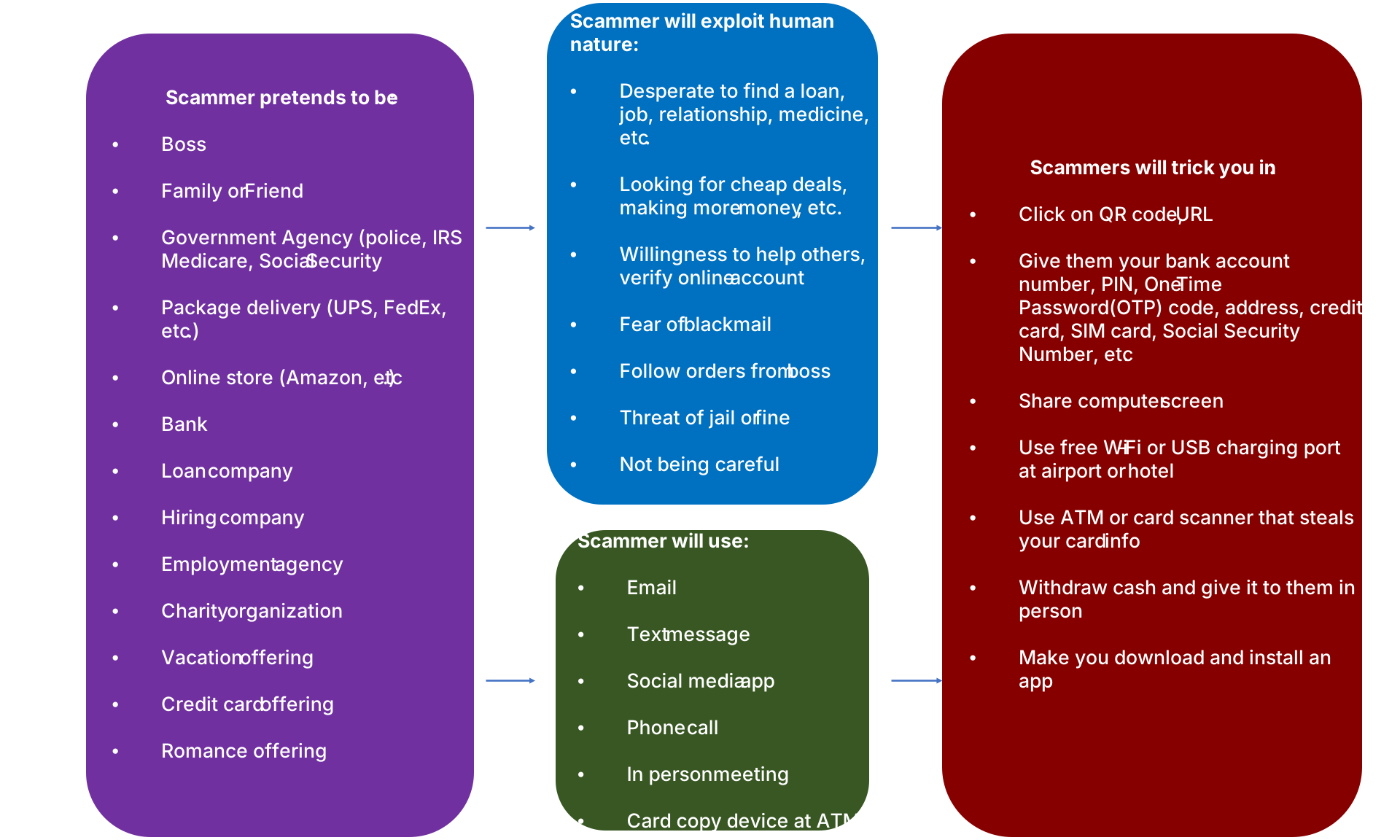
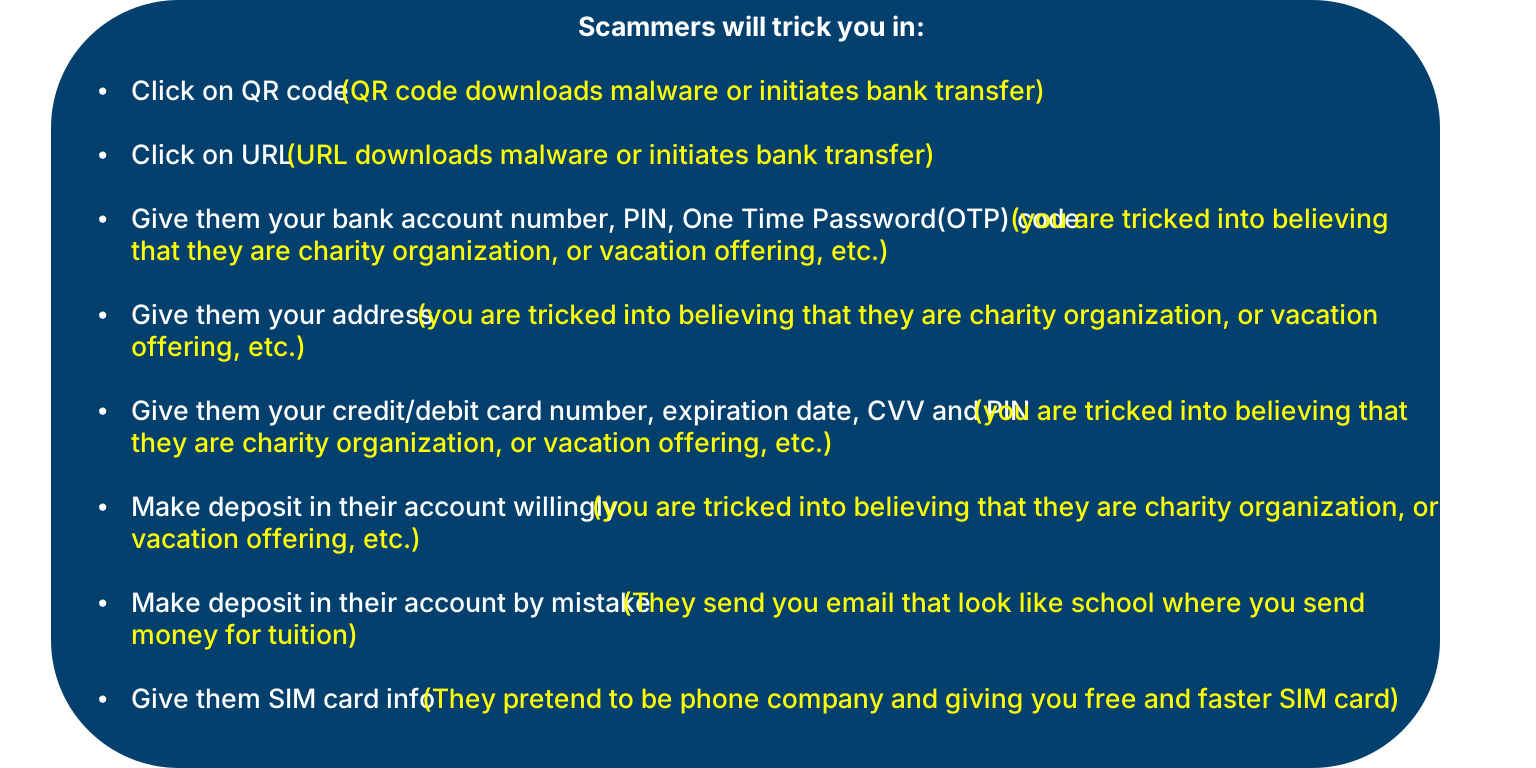
How a scam worksHow a scam works

Open full-size diagram ↗

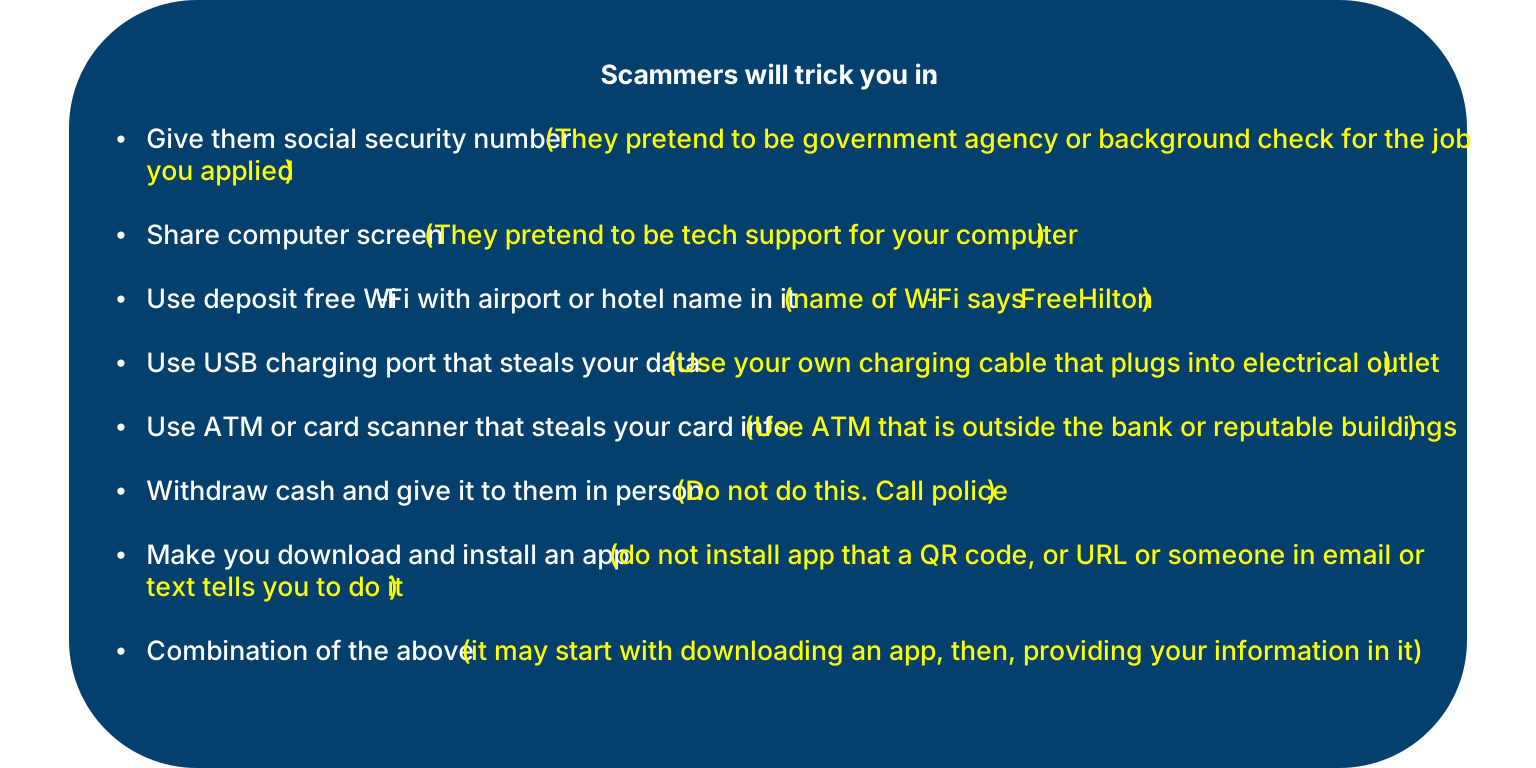
How scammers build trustHow scammers build trust

Open full-size diagram ↗

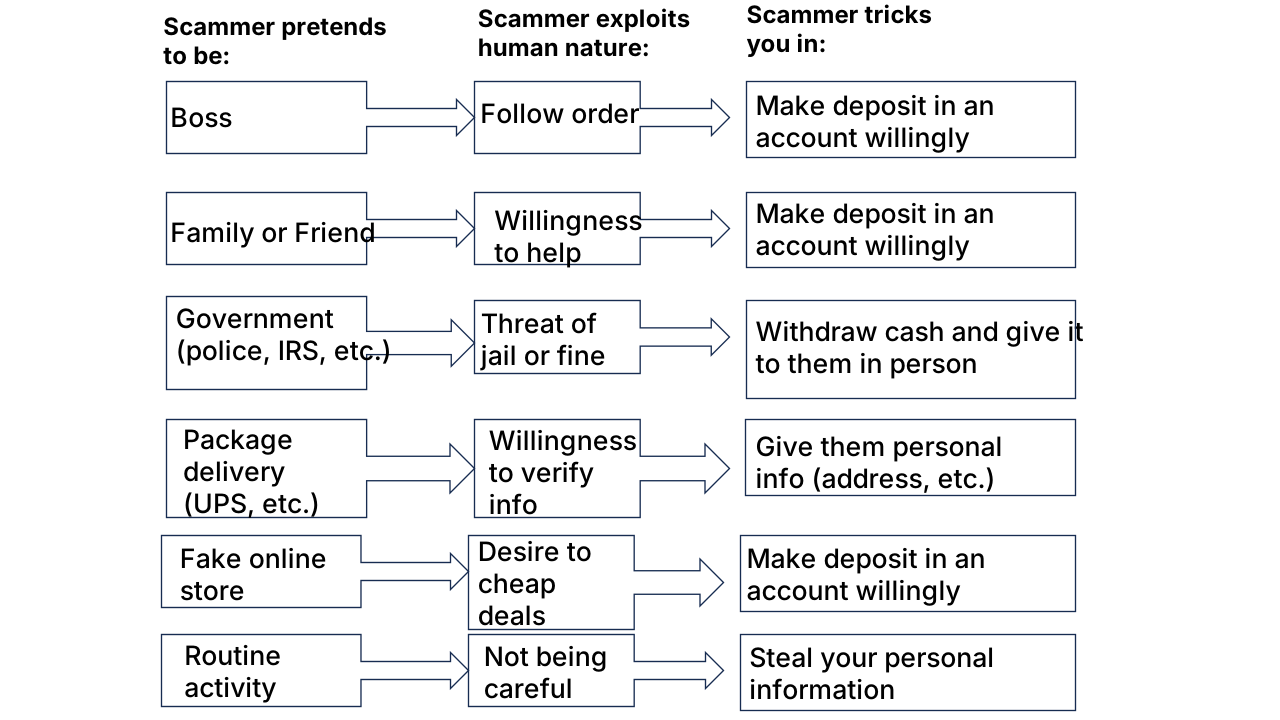
Pressure and manipulation tacticsPressure and manipulation tactics

Open full-size diagram ↗

Common scam scenariosCommon scam scenarios

Open full-size diagram ↗

References & Sources

The information on this page is compiled from authoritative government and security organizations. All sources are publicly available and regularly updated.

Federal Trade Commission (FTC) - "How to Recognize and Avoid Phishing Scams." consumer.ftc.gov/articles/how-recognize-and-avoid-phishing-scams
Federal Communications Commission (FCC) - "Robocalls and Caller ID Spoofing." fcc.gov/consumers/guides/robocalls
Federal Trade Commission (FTC) - "How to Protect Yourself from Credit Card Fraud." consumer.ftc.gov/articles/0218-protect-against-credit-card-fraud
Securities and Exchange Commission (SEC) - "Investment Scams." investor.gov/protect-your-investments/fraud
Federal Trade Commission (FTC) - "Free Credit Reports." consumer.ftc.gov/articles/free-credit-reports
Federal Trade Commission (FTC) - "Identity Theft." consumer.ftc.gov/topics/identity-theft
Federal Trade Commission (FTC) - "Credit Freeze FAQs." consumer.ftc.gov/articles/0497-credit-freeze-faqs
FBI Internet Crime Complaint Center (IC3) - "Search for Common Scams" ic3.gov/Home/CommonScams
Cybersecurity and Infrastructure Security Agency (CISA) - "Avoiding Social Engineering and Phishing Attacks." cisa.gov/secure-our-world
Federal Trade Commission (FTC) - "Report Fraud." ftc.gov/faq/consumer-protection/report-fraud
Note: This website is for educational purposes only. Information is aggregated from publicly available sources. Always verify information with official government websites and consult with appropriate professionals for specific situations.